The BMA Cymru Wales blog has moved

You should be automatically redirected in 6 seconds. If not, visit
http://blogs.bma.org.uk/cymruwales
and update your bookmarks.

Showing posts with label LHBs. Show all posts

Wednesday, 6 January 2010

New year message from the Chair of Welsh Council, Dr Andrew Dearden


Well a New Year dawns and the snow has fallen again.

There are several big issues facing our profession in the coming year. Not least Revalidation and the preparations for its introduction.

I am pleased to say that due to the work of BMA Cymru Wales, our dedicated staff and Council members, we in Wales are well placed to agree an acceptable and GMC approved system that I think will be welcomed by the doctors in Wales. (see recent revalidation newsletter for details)

But we also face the worse financial situation the country and NHS has faced for many years, if not decades. We face real term funding / cash cuts to the NHS services. While we know who caused the problems we now face, as it was not us(!), it will fall to us to do what we can to protect the NHS and our patients from severe cuts to their medical services.

The new health boards desperately need our input, ideas and suggestions so we can adapt to the financial cuts without damaging cuts to healthcare provision in Wales. While NHS managers may not have listened to us (much) in the past, they really do need to take our advice and ideas now. Not to do so, would be a mistake.

Tuesday, 5 January 2010

2010 for Consultants in Wales


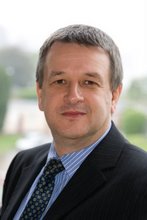
My Colleague and Chair of the Welsh Consultants Committee Dr Stefan Coghlan (pictured), has considered what 2010 will look like for Consultants in Wales.

"I expect this to be a difficult year for Consultants in Wales as we see the financial belt tightening further.

"With 7 to 10 % Cost Improvement programmes up and running in the new LHBs, the prospect of a further 10% cut in the budget allocation to Wales and demand ever increasing for specialist services, we can expect a tough year or two ahead.

"I have written before about the pressures on Consultants to fill gaps left by EWTD, and there is increasing evidence that poor planning by Trusts (and now LHBs) is leaving consultants to pick up the pieces.

"Is there any good news?

"Well, the Access targets are likely to be relaxed as the NHS simply can not afford to treat all patients within the 26 week timescale. The Minister herself has emphasised the need to treat patients on the basis of clinical priority as determined by Consultants.

"Revalidation may not be embraced quite so willingly by governments with stretched finances and little evidence of the benefit that this additional bureaucracy will bring.

"BMA Cymru Wales is exploring the possibility with partners of a Wales solution to revalidation.

"It may be a year or two before we see the benefits of integrating primary and secondary care, but there remains the real possibility of Consultants being able to lead the delivery of specialist care whether in the acute setting or in the community in partnership with GP colleagues."

Wishing you a happy new year.
Dr Stefan Coghlan
Chairman WCC

Do you agree with Stefan's predictions? Are you a Consultant in Wales? What are your predictions?

Thursday, 11 June 2009

Welsh GP leader's LMC speech - a new NHS Wales fit for patients, not managers


This year’s UK Conference of Local Medical Committees is currently underway at BMA House.

Dr David Bailey, Chair of GPC Wales has just delivered his speech to delegates, detailing the forthcoming priorities for the newly reformed NHS Wales.

Here are some of the key points from the speech...

Dr Bailey's outlined how a reorganised NHS Wales needs to be "fit for the people who use it, not the people who manage it" and how ten years of devolution have left all four UK nations with very different healthcare systems.

"In Wales we have avoided the commercialisation of health for shareholder profit and we still have an NHS free at the point of sale. And that is to the credit of Wales and the Welsh government.

"However we still have a GP workforce where incomes are lower and falling faster than England, where recruitment of trainees is falling – two things possibly not unrelated - and where treating the highest levels of disease prevalence in the UK is still under resourced. These are all things GPC Wales has to, and will, address as NHS Wales is reorganised."

And it is this reorganisation that Dr Bailey reckons poses the biggest challenge for Welsh GPs in the coming year.

"Eight organisations combining the old trusts and Local Health Boards and eradicating the purchaser provider split – at least in secondary care – will be tasked with delivering healthcare for the people of Wales. These are the organisations that GPs, who are still independent contractors, will have to engage with.

"There will be opportunities. The aim is to move care and resources into primary care to deliver better and more responsive services to our patients closer to their homes, avoiding the hazards of hospitals, and providing a personal service with continuity of care. That’s what Welsh GPs want to do and that’s what our patients, I believe, want of us. They want us to coordinate health and social care in their own homes, they want continuity and to be able to trust a doctor they know. They want good preventive care and to be involved in managing their chronic health problems.

"But, just like everywhere else in the UK, the primary care sponge is full. Give us the resources and – using the mechanisms in the GMS contract - we can deliver, but resources there must be."

View the full conference agenda