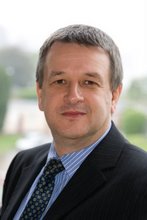
Last weekend we attended the Welsh Conference of Representatives of Local Medical Committees. Here is the annual report which Dr David Bailey, Chairman of GPC Wales delivered.
Since last year’s report the world has changed. We are now in the worst recession for decades – a situation not of our making but one which will have serious consequences for general practice.
The NHS will have to make significant cuts to overall spending, and this is likely to mean pitiful pay rises if any over the next 2-3 years. The only options for improving income will be private work or engaging in new cost efficient services. GPs in Wales will need to carefully consider how to engage the public in recognising the worth of General practice and will need to look carefully at the things that are important to their patients.
We will need to be pro active both with WAG, as we already are in regular meetings, and equally importantly with patients – through patient groups and patient charities the CHCs and our own Patient Liaison Groups.
We do have a clear idea of their likely concerns – Access, continuity and out of hours, though there may be others, and we need to consider how we could address them. We have already published guidance on opening for practices and we're enquiring from AMs how many actual complaints they get.
Following much anger in the profession, we have agreed to an alternative way of administering the Patient Experience questionnaire in Wales for this year which will involve practices administering the questionnaire to patients attending their practice with additional guidance from their local CHC. The results will be analysed as before by MORI for QOF payments but there is a golden opportunity to both engage patients and CHCs in discussion on practice access and to inform patients of the services you offer.
I’m confident that this deal will lead to better QOF scores in Wales by removing the confusion of the postal questionnaire, but we should view it as a positive opportunity to improve our services and our engagement with patients and not just negatively as a correction of last year’s unfairness.
Patients want to think well of their practices - we are still the most trusted profession and we should value and treasure that status. GPC has consistently supported the idea of patient liaison groups and they can be a way of improving both access and continuity if we listen to them. Practices should also try and design services to maximise the opportunity for patients when they wish to see the same doctor – continuity is still the unique selling point of UK general practice.
The Doctor Ubani case in England has put out of hours under the spotlight again and Welsh GPs need to have a view on what we want for OOH services. There is I'm sure absolutely no appetite in Wales for taking back OOH responsibility but many of us feel the LHBs have made a bad job of organising out of hours care for our patients.
There is currently an unacceptable variation in funding levels and the primary care strategy work again gives us the opportunity to press for an adequately funded and safely designed OOH service in our own areas. This would undoubtedly take pressure off hospitals, address many of the issues around patient frailty and allow more patients to be cared for in their own homes. In this particular area of the service the case for spend to save is absolutely crystal clear.
Currently the reason for many GPs disengaging from the OOH service is not money but intrusive micromanagement and understaffing leading to working conditions that many feel put both them and their patients at risk. So do we want to engage with the LHBs in redesigning better services? – I think we do but it’s an important question for this conference today.
Moving on now to contractual matters. We are awaiting the DDRB report. GPC were unable to reach agreement on any change to MPIG after the differential rise last year as we felt that the amount of money in the system would make this approach pointless. The governments however have suggested a rerun of the bizarre award from 2 years ago where all the rise – which will presumably mainly just reflect the higher expenses for all GPs - should be used to move GPs off MPIG – which roughly translated means no rise at all for all MPIG practices.
Strangely the negs (particularly me given there are more MPIG practices in Wales than anywhere else) were not much taken with this idea and GPC has submitted different and we feel much more sensible and fair evidence to the review body. We have asked to cover expenses in line with the mechanism in last year’s award and then just to be treated like every other doctor. What DDRB will actually do is anyone’s guess but any rise is likely to be tiny.
In an environment where jobs are being lost and wages cut we are fortunate to be in a job where rewards are good and job satisfaction high. Against that background as I've said Welsh GPs need to engage the Welsh public to demonstrate what fantastic value for money they still represent.
We’ve seen a massive health reorganisation in Wales this year – although the management faces seem eerily familiar - and there is still some confusion about how and whether the mantra of clinical engagement will get delivered. One thing is perfectly clear the only constant and proven avenues for all GPs to have their voices heard remain the LMCs and GPC.
Chris Jones' primary care strategic framework gained a lot of support in principle but we remain to be convinced that the resources both for infrastructure and GP engagement will be forthcoming. The principle of care closer to home delivered by a primary care led team is one we all support but the willingness of LHBs to reallocate resources to make it happen will be the main criterion against which most GPs will judge them.
And I have to say that LHB actions on enhanced services in Wales this year have not exactly increased the confidence of GPs. Despite a range of patient friendly services available to be commissioned and the support and commitment of the Minister for Health - Edwina Hart who allocated nearly £6.5 million to support extending services and sent it to the LHBs, enhanced service spending increased only £2.5 million in Wales last year. Our message to LHBs must be that GPs want to improve and enhance community services but, at least in some cases, they need to do their job much, much better.
Though the basket of enhanced services is the same as last year I (am happy to/hoped to) announce the finalising of an agreement to restructure the payments – though not the work - in the diabetic DES to better balance the reward for enhancing the process of diabetic care with that for achieving targets. (Sadly though it has gone through finance the papers are still with the minister for sign off) If approved I hope this will encourage the engagement of even more practices to further enhance the quality of diabetic care delivered in Wales in line with the strategy we want to support. In the light of evolving evidence on diabetic management we may look at revised criteria for 2010/11.
Talking of quality of care once again Welsh GPs increased their clinical QOF scores – matching the English despite 15% more workload. Unfortunately the patient experience survey meant that despite 80%+ satisfaction ratings overall Welsh practices lost QOF money last year. GPC Wales produced guidance on appeals and I wish all practices good luck in trying to recoup some of their losses.
We are also working to develop further improvements in clinical quality. We are seeing the benefits of the nursing home and diabetic DESs already, we are in advanced discussions about a palliative care DES and there has been positive patient feedback where the more holistic Welsh extended hours arrangements have been delivered.
The new First Minister Carwyn Jones has expressed a wish to see extended hours continue to be offered in Wales. He may however find it helpful to consider the fact that, despite a huge under spend in new enhanced services funding last year, less than half the old LHBs offered practices the opportunity to participate.
Rural doctors in Wales have long provided a fantastic service to their patients often across huge practice areas and the new rural health strategy may be evidence of some increased recognition of their contribution and their problems. On the downside however has been the 4.5% cut in the fee scale for the dispensing which keeps many rural GPs afloat and the ongoing difficulties in the market in terms of wholesaler charging and discounts. We are cooperating in a cost of service enquiry with the English Department and WAG is engaged as an observer with the aim of putting dispensing back on a fair economic footing.
GPC Wales produced the "Promoting Partnership" Document in 2009 and distributed it to all Welsh practices. The future of our craft depends on engaging the younger generation and a BMA Cymru survey last year confirmed that for 2/3 of sessional and trainee GPs in Wales their ultimate ambition is still partnership. The document sets out just why that's still a great option for existing GPs in Wales to offer and I hope every Welsh practice will take note.
Apart from the reorganisation and the recession the other main issue affecting GPs is revalidation. The timetable has moved back and back and the BMA is determined that the process will be properly funded. We in Wales have the skeleton of a process already with a first class appraisal system expertly managed and properly funded – even better Malcolm assures me that appraisal files can’t be googled as in some other countries I could name....
We also have the excellent work of Paul Myres and his team on the online clinical governance tool already in use for years with a decent evidence base and manageable workload, and we have the All Wales performance procedures and a nod here to Alison, Ian and Richard Quirke for their work on this.
Paul Williams head of NHS Wales has endorsed the continued use of the performance procedures in the new organisations. These three things - together with the sadly inescapable multisource feedback - should enable Welsh GPs to meet the criteria standards and evidence for revalidation as set by the RCGP in a proportionate system which doesn’t impact too much on our primary purpose – caring for our patients.
The end of my report as ever is an acknowledgement of many contributions to the work of GPC Wales. Thanks to Laurence Beth and Matthew from the UK team who join us today together with all my other friends in the smoke for their support. Thanks also to my current team Gruff Jones, Ian Millington, Charlotte Jones and Phil White and a special thank you to two ex members Kay Saunders and David Grant. To lose one deputy chairman in a year is unfortunate, to lose two looks like carelessness but the contributions of both Kay and David to the team were enormous. They will both be missed and we may perhaps see one or both of them back involved with the team in the future.
Lastly my thanks to the office – Richard Lewis, Andrew Dearden and Stephen Jones for their wise counsel, and John, Alison, Carla and Lucy for all their hard work. Most of all thanks to the incomparable Donna Martin (who’s out of the office) whose organisational skills are often the only thing standing between the Welsh neg team and chaos and disorder.
Ladies and Gentlemen enjoy the conference, Mr Chairman I have pleasure in presenting my 2010 report.


 Posts
Posts