The BMA Cymru Wales blog has moved

You should be automatically redirected in 6 seconds. If not, visit
http://blogs.bma.org.uk/cymruwales
and update your bookmarks.

Showing posts with label junior doctors. Show all posts

Monday, 1 March 2010

We’ll Keep a Welcome/Pleidiol wyf i'm gwlad


Today we are launching a new campaign "We'll Keep a Welcome" to attract Welsh students who have left the country to study medicine, to return to Wales to train as doctors.

We felt that St. David’s day was the perfect day for our launch.

BMA Cymru Wales will be contacting all schools in Wales to reach out to those prospective medical students before they leave for university.

All students will be sent packs which will include letters from me, as well as from Welsh postgraduate dean Derek Gallen, along with information about training in Wales and posters to put up in medical schools.

The idea for the campaign came about in an effort to tackle the problem of the severe shortage of junior, staff-grade and associate specialist doctors in Wales.

We have a facebook group to accompany the campaign, which is a great resource for keeping in touch and receiving news on what’s going on in Wales - until it’s time for those students to come home.

Here is the link to our facebook group - join it and spread the word!

Thursday, 7 January 2010

2010 for Junior Doctors in Wales


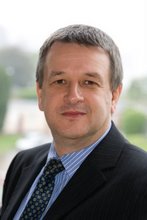
My colleague and Chair of the Welsh Junior Doctors Committee Dr Dai Samuel (pictured) looks at the year ahead for junior doctors in Wales.

"2010 brings new and ongoing challenges for the Welsh Junior Doctors Committee. With the introduction of the EWTD back in August 2009, as a committee we are constantly reviewing the impact this is having on the working and training lives of Doctors in Wales. Being part of external groups such as the Junior Doctors Review Group offers the BMA a voice within the Welsh Assembly Government as well as the Wales Deanery and I hope our relationship with both these organisations continues to flourish in the new year.

"An exiting project which will come to fruition this year will be the development of an Ambassador role for junior doctors in Wales as well as working with the Deanery to nurture a network of doctors working on the front line to assess and discuss issues relating to Quality Assurance in medical education.

"Our committee grew and matured last year and I hope that conference 2010 will prove a successful one for the committee. Establishing equal voting rights for devolved nations on JDC have been a source of concern in recent times and this will be undoubtedly be debated at conference. Negotiating a new contract lies on the horizon for UK JDC and I relish the challenge of ensuring that doctors in Wales get a palatable and attractive offer to remain here to work and live. This issue never strays far from the top of the agenda with WJDC and we continue to look at what could and does make Wales a unique place to live and work as a doctor. Links with WMSC continue to mature and I hope I can help encourage students to become doctors in Wales, and members of WMSC members of WJDC!

"My hope is that the committee will attract new members, particularly from hospitals away from the capital city. Our roadshow tours to hospital messes are proving popular and hopefully planting the seeds of interest for new members to attend a committee meeting! Seeing how we can change things and interact with Chief Executives of Local Health Boards is an example of how grassroot members’ voices and opinions have channelled our work plan this year.

"WJDC looks forward to working BMA Cymru, Welsh Council and other professional colleagues in 2010."

Dai Samuel Chairperson WDJC 2009-2010

Are you a junior doctor in Wales? What are your thoughts on issues facing junior doctors for the year ahead?

Thursday, 10 September 2009

Life as a junior doctor isn’t car "crash" TV

I was intrigued to hear about a new TV series, “Crash” which started on BBC1 last night, focussing on the lives of junior doctors, who’re just embarking on their medical careers and it is good to see this area of the medical profession being given such a prominent platform. I was curious though to find out how true to life it might actually try to be. However, as it’s been a while since I was a junior myself, this might be better coming from Dr David Samuel, chairman of the BMA’s Welsh Junior Doctors committee. So here’s his take on the show...

A hard-hitting, fast paced drama, which portrays the challenges and sometimes adverse conditions facing a junior doctor. The actors created a realistic portrayal of the nervous tension that flow through the veins of every new doctor, as well as giving some insight into some of the non-clinical issues facing hospitals across the country. Although some of the behaviours were not in keeping with good practice, the interactions between staff and patients were realistic - the use of dialect to communicate appropriately puts the more realistic dramas to shame where clinical jargon fills the ears of confused patients.

The only shame was that one of the show's stars was lost so early on but even this scene was skilfully executed.

I look forward to the next episode to see more flashbacks of my own year as an F1!

Thursday, 20 August 2009

Juniors affected by exams mix up need our support

This really is an awful situation that these four young people are currently faced with and it’s very difficult to imagine how they must be feeling right now. That’s why BMA Cymru Wales will be doing everything possible to offer as much help and support as we can to get them through this.

Rest assured too, we will be seeking answers as to how such a fundamental error occurred and what changes will be made to make sure such serious mistakes are not repeated. However, at this moment in time, the key focus of our efforts is to ensure that those involved receive all the support we can provide.

Tuesday, 18 August 2009

EWTD highlights the growing need for BMA Cymru Wales’ Option 7 Campaign

This Sunday Times article just goes to show how important and timely BMA Cymru Wales’ Option 7 Campaign is. Although this article refers to Scotland, the situation is more than likely being replicated in other parts of the UK. The Option 7 Campaign (named after the option on the BMA hotline) was originally set up because we were hearing of instances of intimidation/harassment/bullying of junior doctors before the introduction of the European Working Time Directive (EWTD) and chances are this has just exacerbated things. EWTD stipulates that juniors must not work more than 48 hours a week, but there are of course easy ways to get around this legislation, such as juniors being told to under report the amount of hours they are clocking up in any given week.

The European Commission must do more than “threaten” to investigate these allegations highlighted in The Sunday Times, it has a duty to do so, for the safety of both patients and NHS staff.

Junior doctors in Wales can also report their concerns to the BMA and they don’t need be a member to do so. Any information given will be kept completely confidential. Help us to help juniors by ringing the BMA on 0300 123 123 3 and select option seven.

Show your support for the Option 7 Campaign on facebook too, by joining one of our groups, follow the links below.

BMA Cymru Wales Option 7 Campaign facebook group

BMA Cymru Wales Option 7 Campaign Supporters of junior doctors facebook group

Tuesday, 4 August 2009

New Option 7 Campaign facebook group - for supporters of junior doctors

In addition to the last bog post, unveiling the launch of BMA Cymru Wales' Option 7 Campaign, we have now set up an additional facebook group, for friends/ colleagues/ family members of junior doctors in Wales to show their support for the cause.

Join the BMA Cymru Wales Option 7 Campaign - supporters of junior doctors facebook group and post your message of support too.

And thanks to everyone who has already joined the group(s) and are supporting our campaign!

Friday, 31 July 2009

The Option 7 campaign – to improve the lives of junior doctors in Wales

BMA Cymru Wales is today launching a campaign aimed at improving the working lives of junior doctors in Wales.

It’s previously been touched upon on this blog, but we have now become extremely concerned about the working conditions of junior doctors and the impact that this could have both on careers and on patient safety. This includes;

• Lack of training opportunities
• Unsafe staffing levels
• Bullying/ intimidation
• Non-compliant rota/ rota gaps
• Insufficient locum cover

Junior doctors are understandably afraid to voice any concerns themselves with senior management, for fear of repercussions.

So that’s why BMA Cymru Wales is launching the Option 7 campaign - named after the option on a BMA phone line that juniors can select, to discuss bullying and harassment in confidence.

The on-going campaign will involve myself and BMA Welsh council chairman Dr Andrew Dearden meeting with the chairs and chief executives of the new NHS health boards in Wales.

We are hearing of some worrying cases concerning junior doctors, which seem to be more widespread than just “one-off” incidents. I do think it has got to the point where it is starting to affect the reputation of training in Wales.

It is vitally important that we get the message out there that this type of behaviour cannot and will not be tolerated, no matter what the source, either from management or clinical staff.

In the meetings with NHS health board managers (chief executives and chairs), we will be offering support to employers to resolve the problems highlighted and drawing up an action plan of;

• What exactly will be done to address the issues
• Who will take responsibility for making sure action is taken
• Setting deadlines for action and resolving problems raised in these meetings

We will also be meeting as many junior doctors as possible during the campaign.

If you are a junior doctor and wish to raise a concern with a BMA adviser the hotline number is 0300 123 123 3, then select option 7.

You can also fill out a form on the BMA website.

To get involved and show you support for our campaign, join our facebook group.

View Dr Andrew Dearden and Dr David Samuel (chairman of the BMA's Welsh Junior Doctors Committee) talking about the campaign on BMA Cymru TV.

And follow the campaign updates on Twitter.

Thursday, 30 July 2009

Action needed now to stop NHS Wales becoming unsafe for staff and patients

Unless urgent action is taken to plug the gap in the shortage of middle grade doctors, the NHS in Wales could become unsafe both for staff and patients.

The problem‘s been highlighted this week within Hywel Dda NHS Trust, where 62 posts remain vacant.

But this situation is by no means isolated to Hywel Dda, with Abertawe Bro Morganwg Trust having had to move some specialist services because they were inadequately staffed. Similar problems are also affecting North Wales too.

We are facing unprecedented levels of a lack of middle grade and junior doctors right across Wales, which is clearly unacceptable to both our members and people needing hospital treatment and this does not look like changing in the immediate future.

There are a variety of reasons for this shortage, one being that Wales does not top the list of places where many junior doctors desire to work. Also, changes to the rules regarding immigration have caused problems with recruitment across the whole of the UK, not just Wales.

The high level of middle grade and junior doctor vacancies means that consultants are left picking up the pieces where there are gaps in rotas. This is compromising consultants’ ability to deliver routine daily work and there is no evidence that hospitals are adjusting services to take these shortfalls into account. Inevitably, the rates of work being undertaken cannot be sustained with the current levels of staffing. Hospital managers really need to address this now, working with clinical colleagues.

These problems come as no surprise however to us at the BMA, having predicted that these shortages would happen at some point. That is why we have, for some time now been trying to meet with representatives from the Welsh Assembly Government, to see how we can work together, drawing on the experience of front line doctors, especially juniors, to look for some solutions to the situation.

BMA Cymru Wales has also worked in partnership with the Wales Deanery for Postgraduate Medical and Dental Education, to produce a DVD for students, giving an invaluable insight into medical training here.

The aim of the video is to promote Wales as a primary destination to study medicine and to attract more junior doctors to apply, to complete their postgraduate training here. However, the positive effects of this will not be seen immediately.

The initiative to provide free accommodation for F1 doctors has been welcomed by BMA Cymru Wales and has had some impact. Yet, I think far more effort should have been put into anticipating and planning for the current shortages, especially the impact of the European Working Time Directive which has been known about for more than 13 years! Whilst it is very late in the day, I urge the Welsh Assembly Government and employers to focus on the actions we have been highlighting for some considerable time. I do not think sufficient, co-ordinated efforts to recruit and retain doctors to Wales has been made.

While in the short term, we have to have contingency plans put in place as soon as possible to ensure the safety of both NHS staff and patients, we need far more sustainable solutions if NHS Wales is to deliver and maintain the quality and capacity of services the people of Wales deserve.

Wednesday, 8 July 2009

Health Minister’s decision to extend free accommodation for junior doctors indefinitely is great news

It’s been confirmed this afternoon by the Welsh Assembly Government that all first year doctors training in Wales will now benefit from free hospital accommodation INDEFINITELY. This really is great news.

Most junior doctors reading this will no doubt be aware that Health Minister Edwina Hart had previously agreed to extend the provision of free on-site housing for F1 training grade doctors in Wales, until summer 2010. Well, this will now continue for the foreseeable future.

The decision follows the recommendations by an Accommodation Review Group (with strong representation by BMA Cymru Wales) supported by collaborative discussions between BMA Cymru Wales, the postgraduate deanery and the Welsh Assembly Government.

After the requirement for pre-registration doctors to be resident at a hospital was removed from the Medical Act last year, it led to protests by medical students outside the University Hospital of Wales, in Cardiff.

Without this free hospital accommodation, its estimated there would be an additional cost to newly-qualified junior doctors of around £4,800 a year, on top of average student debts of £20,000.

So I do think this decision demonstrates the Welsh Assembly Government's commitment to value the role of junior doctors in the NHS and will help to ensure Wales becomes the destination of choice for medical training. It is testament to the collaborative working between the profession and government as NHS Wales returns to the core principles on which the health service was founded.

The minister clearly recognises the importance of valuing junior staff in Wales. We have severe shortfalls in posts in Wales and this will go some way towards creating the culture which is necessary to attract the best medical talent for the future. This, associated with a number of other initiatives to improve training opportunities and academic medicine and research programmes, will bode well for the future of training in Wales and ultimately for Welsh patients.

BMA Cymru Wales will now continue, via the Accommodation Review Group, to ensure the quality of accommodation for junior doctors in Wales is improved to meet at least basic standards and to press for accommodation that does not, to be addressed as a matter of urgency.

Thursday, 2 July 2009

ARM – focus on student finance/debt

And so to yesterday afternoon’s session of the ARM.

We heard the reports from chairs of the following branch of practice committees: general practice; private practice; staff and associate specialists; medical students and junior doctors.

A number of issues within those professions were debated. Conference was treated to a notably lively and impassioned debate on student fees. This is something the Welsh Medical Student Committee (WMSC) has been working on in recent months following the Assembly Education Minister’s proposals to re-focus higher education in Wales.

I know that the Chair of WMSC, Elliott King, has spent many hours considering the implications of the proposals for medical students in Wales and along with the Committee has crafted BMA Cymru Wales’ response to this, at the same time as sitting his own final year exams. I’m looking forward to welcoming Elliott back as Dr King next term given his recent finals success. Congratulations to Elliott and all those who’ve passed their exams.

Conference heard from students who will be graduating with a crippling debt of more than £30,000.

The important area of medical education and training for Junior Doctors also delivered a lively debate. The mention of EWTD, working patterns, rota gaps and student/teacher ratios were met by jeers from fellow Juniors and other delegates. Again the issue of free accommodation for Junior Doctors was discussed. I wonder just how long it will take other nations to follow Wales lead and recognise the value of this important policy.

Thursday, 25 June 2009

How BMA membership can get Junior Doctors discounted access to exam revision tools

Following on from my post about the ARM next week, there will of course be many initiatives being announced there, but I thought I’d give junior doctors and medical students in Wales a heads up on one.

BMA and OnExamination are going to be providing members with a 33% discount off OnExamination’s Junior Doctor exam revision resources, being demonstrated at the ARM next Wednesday.

The Junior Doctor revision resources include:
• MRCP Part 1
• MRCP Part 2
• MRCPCH Part 1 A and B
• MRCOG Part 1
• MRCOG Part 2
• MRCS Part A Papers 1 and 2
• FRCA Primary
• MRCGP
• DRCOG
• MRCPsych Paper 1 and 2

As well as the 33% discount now available on Junior Doctor exam revision resources, the same level of discount is also available for Medical Students in Year 1, Medical Student Years 2-3 and Medical Student Finals. This has been coupled with 50% off BNF Prescribing Practice for Medical Students and free access to Medical Student Fresher.

Visit the OnExamination website for more details.

Wednesday, 10 June 2009

EWTD deadline looms closer but NHS Wales seems no closer to being ready for it

No surprises in this story from the Western Mail, yet another looking at the WAG’s (un)readiness for the implementation of the European Working Time Directive this Summer. For a quick recap on EWTD, the position is that come August, junior doctors should not be working more than 48 hours a week.

The surprise here actually comes in the estimate of how many junior doctors the Government predicts will soon be working on non-compliant rotas – 6% out of 600 in Wales. I’m not quite sure how that figure is arrived at, considering not so long ago, the Auditor General for Wales found that more than half of junior doctors in Wales were working more than 48 hours a week.

A real concern for us, and it should be a massive one for patients too, focuses on hospitals which may bring in rotas which meet EWTD compliance, but in practical terms, are unworkable and could jeopardise the safety of both NHS staff and patients.

In the longer term, it will also have a knock-on effect for the future doctor workforce of the Welsh NHS, with crucial training and educational activities being missed, just to provide the basic cover for patients.

We have been warning the Welsh Assembly Government about this for many years now, so it’s a shame that we’re in a position where we are just weeks away from EWTD coming into effect, yet the Welsh NHS seems to be light years away from being ready for it.

Friday, 5 June 2009

Junior doctor worries are a worry for us all

I think we are all aware that there a significant number of junior doctor vacancies in Wales. BMA Cymru Wales has been working with the Deanery in Wales to try and improve this situation and attract junior doctors to come and live and work here.

The effect of vacancies will be exacerbated in August with the introduction of the European Working Time Directive. The adverse consequences of unfilled junior doctor posts and its impact on the ability to deliver patient care cannot be overestimated.

I didn’t, however, appreciate just how bad the effects are being felt NOW, until I met with some junior doctors in South Wales, and heard some worrying concerns about many aspects of their training and development. They highlighted a range of issues, only some of which I’ll outline here:

A&E on-call rota

I was told of instances where F1 and F2 doctors are merely acting as clerking machines, which isn’t allowing for teaching on post take ward rounds. Rotas are also being used as a fast-track, in order to maintain the four hour A&E targets set by but this doesn’t provide opportunities for juniors to learn.

Rota gaps and lack of cover on wards
I also heard of how F1 doctors are being left without senior support on wards, for days at a time. Rota gaps are so widespread within the majority of specialities, there isn’t any advertising in advance for any known gaps and I was told that whilst medical rotas appear to be compliant on paper, that doesn’t actually translate into reality.

Locum cover

The meeting highlighted how there’s no real effort made when it comes to finding locums, instead juniors are being called back from annual leave to cover, with locum rates here being apparently half those in England; this is no way improve morale or make Wales the premium destination for junior doctors, especially when it is undertaken in a climate of bullying and intimidation.

Nurse Practitioner intimidation

Anecdotal evidence was also relayed to me about how Nurse Practitioners are prescribing medications and fluids and then demanding that doctors sign for them, even though the Nurse Practitioners are meant apparently to be independent prescribers. Junior doctors also felt that some working arrangements left them restricted and limited in their exposure to the range of clinical experience necessary for their training, especially when managing problematic patients.

I could go on, but I think this highlights the sort of issues facing junior doctors in Welsh hospitals. BMA Cymru Wales is so concerned about all of this, it is considering an initiative led by Welsh Council and the Welsh Junior Doctors Committee to take these matters up with the relevant employers.

Unless urgent action is taken to address these matters, our ability to attract the best to Wales will be thwarted. And that would be a shame as the direction of travel of the WAG and the Health Minister, Edwina Hart, to get back to the core values of the health service is something the BMA welcomes. It is a system that doctors should be queuing up to be a part of. Let's all get on the case of the problems, have more ambitious aspirations and ensure the patients of Wales receive the high standard of services they deserve.

Expect to hear more about this over the coming weeks, this blog post won’t be the end of the matter!

If you have concerns as a doctor working in Wales, or a patient receiving care here, over any of the issues highlighted in this post, then please tell BMA Cymru Wales about them! You can do so just by leaving your comments on this blog post, anonymously.

Tuesday, 12 May 2009

To wear a white coat, or not to wear white coat? That is the question…

OK, so I’ll make this clear from the start, I do NOT have a problem with the Welsh Assembly Government’s recent announcement to introduce colour-coded uniforms for nurses in NHS Wales. It will undoubtedly help patients identify who’s who. But more importantly here, there needs to be adequate laundry services and sufficient change of clothing to assist in reducing cross infection. Is this guaranteed? Given the fact that in this article the Assembly only “hopes to have laundries in hospitals”, let’s hope it’s more than just an aspiration.

On another point – the same article has the Chief Nursing Officer Rosemary Kennedy quoted as saying “We do have doctors floating around with white coats flapping around behind them. We have got very lax.”

This is disparaging of the many doctors in NHS Wales who are hard working, often for many excessive and continuous hours to plug gaps in rotas. They are far from “floating around”. Little wonder then that Wales is not top of junior doctors destinations with comments like this.

I don’t really think doctors and white coats “flapping” or otherwise is the real issue here when it comes to hygiene. They are no more of an infection risk than any other type of hospital clothing. What matters most is having comprehensive laundry facilities, with fresh clothing frequently available. We can of course hope for this!

This highlights a bigger issue about NHS uniform policy and it’s something that the BMA’s Welsh Medical Student’s Committee (WMSC) has been trying to get clear guidance and a straight answer on for some time now.

18 months ago the WMSC wrote to the Health Minister asking for clarification regarding hospital hygiene and “white coat” protocols and the committee, despite repeated attempts, is no closer to getting an answer on this, with the policy seemingly decided on an individual trust basis. So, our more junior members, when on rotation, are going to different hospitals, where in some cases, they can wear white coats and in others, are told it’s not acceptable to wear them. All this confusion still remains, despite the fact that an All Wales Uniform Working Group was set up by the WAG to look into white coats protocol amongst other things, more than a year ago. Not much “flapping” going on there then!

Friday, 8 May 2009

Concern over readiness for EWTD in the Welsh NHS deepens

My concern about the effects from the implementation of the EWTD (European Working Time Directive) weren’t just confirmed at BMA Cymru Wales’ recent Policy day on the matter – they grew a whole lot deeper.

The Directive puts a limit on the working week of 48 hours for all employed doctors, including junior doctors, and it must be implemented by Trusts in full, no later than 1st August this year. Junior doctors were excluded from the original legislation because of the nature of their training, and the limit of 48 hours was to be phased in.

The deadline is fast approaching and despite the fact Trusts have had (literally) years to prepare for it, to say that we are still some way from being ready to move to a reduced working week, and thus ready to ensure essential protection for doctors and patients, is a massive understatement. This was highlighted by the Wales Audit Office just a few weeks ago.

A number of key messages came out of the Policy day, including drastic junior shortages, compounded by insufficient numbers of consultants to fulfill requirements of services to patients whilst at the same time trying to provide the dedicated and comprehensive training and support juniors need.

Also, members, with frontline-delivery experience, suggested a number of solutions in order for Wales to prepare and to cope with the implementation of EWTD. BMA Cymru, as the voice of doctors in Wales, will be taking these up with the Health Minister and with Welsh NHS Trusts in the next few weeks and as we approach the August deadline.

But with the situation already dire and morale amongst junior doctors at an all time low, without central support and adequate preparation from Trusts there is a significant threat to the current standard of medical training, to the delivery of healthcare provision, and to the quality of patient care as a result.

Thursday, 26 March 2009

Where are all our young GPs?

Glad to see that the issue of the very real prospect of a GP shortage in South Wales is getting some attention. Dr David Bailey, Chairman of our GP committee is highlighting the problem in the South Wales Echo as new figures show that most doctors here are now aged 60 or over, without younger ones coming through to replace them.

This seems to suggest that young medics are choosing not become a GP and perhaps some work needs to be undertaken to look at why this is. After all, it should be seen as a very attractive career option, what with being your own boss, being able to make decisions about patient care on the spot and having a direct and important link with the community you serve.

Perhaps what’s even more worrying still is the fact that, hearing from some medical students yesterday, it seems in years to come, this situation is likely to worsen, as many youngsters are being put off considering medicine as a viable career option at all, because of the increasing cost of training to be a doctor. But I think that’s a whole new topic for discussion on here in more detail another time! Or maybe some medical students reading this maybe might want to comment on here about how finance can be a barrier to entering the medical profession.

Friday, 19 December 2008

New junior doctors DVD - training the best to be the best

The BMA in Wales hopes a new video, aimed at medical students will help to put Wales on the training map.

BMA Cymru's worked with the Wales Deanery for Postgraduate Medical and Dental Education, to produce this DVD for students, giving an invaluable insight into medical training here.

The aim of the video is to “sell” Wales as a key destination to study medicine and to attract more junior doctors to apply, to complete their postgraduate training here.

The series of short films focuses on five different specialties – Anaesthesia, Obstetrics and Gynaecology, Paediatrics, Pathology and Psychiatry. It was shot on location at hospitals around Wales, with junior doctors and their seniors revealing in their own words, some of the highlights of training, working and living, in Wales.

Wales has a great deal to offer, both in terms of quality of life and the quality of training provided and this is clear throughout the series of short films. The nation can more than “hold its own” with the best of the rest that the UK has to offer.

All doctors who are short-listed for interview will receive a hard copy of the film film, as part of their information pack.

Some BMA members may spot themselves on the small screen, no doubt Oscar glory now beckons!!!

Wednesday, 19 November 2008

Welsh Junior Doctors Committee video

Watch the Vice Chair of the BMA's Welsh Junior Doctors Committee talking about the reformation of the committee and what issues it's working on, for doctors in Wales.

Monday, 15 September 2008

Shabby way to treat England's newly qualified junior doctors

I whole-heartedly support my English BMA colleagues attack on the Westminster Government's "shameful"refusal to even hold talks about the axing of accommodation support to newly qualified junior doctors. The BMA wrote to Anne Keen, England's Health Minister, back in July to request a meeting about the move to end the legal requirement for NHS trusts to provide free hospital accommodation to first year junior doctors. (At an estimated annual cost of £4,800).

Thousands of freshly qualified junior doctors who began work in August will just be starting to feel the effect of this, facing their first rent payments around now. That's on top of an average debt of £21,000.Even though the BMA has outlined the financial implications of this, Anne Keen refuses to meet with my English counterparts.


Thankfully, BMA Cymru Wales' campaign on this issue has already seen the Welsh Assembly Government guarantee free hospital accommodation for newly qualified junior doctors, until next Summer. Also, the Health Minister, Edwina Hart has established a working group to review staff accommodation across all hospitals in Wales - with respect to standards - which in some hospitals is appalling - to the extent that it should be freely provided.

I sincerely hope in coming up with recommendations, the group takes account of the fact Wales needs to do all it can to ensure junior doctors are attracted to work in Wales, and spend their future career here. While only one piece of the jigsaw in that issue - free accommodation will be one of the factors that influence whether the Health Service and the patients of Wales have the numbers of junior doctors we need, or will be running with disrupted and less than adequate services - as seen with the recent problems at Singleton Accident and Emergency Department.

As good as it is, free accommodation guaranteed until August 2009 is unlikely to be good enough to avoid these risks. And for any prospective junior doctor reading this, rest assured, BMA Cymru Wales will be doing all it can to try and get this message across and encourage the Welsh Assembly Government to continue to support junior doctors as it is doing now, and extend the agreement beyond next year.